5OS01 Specialist Employment Law: Complete Study Guide
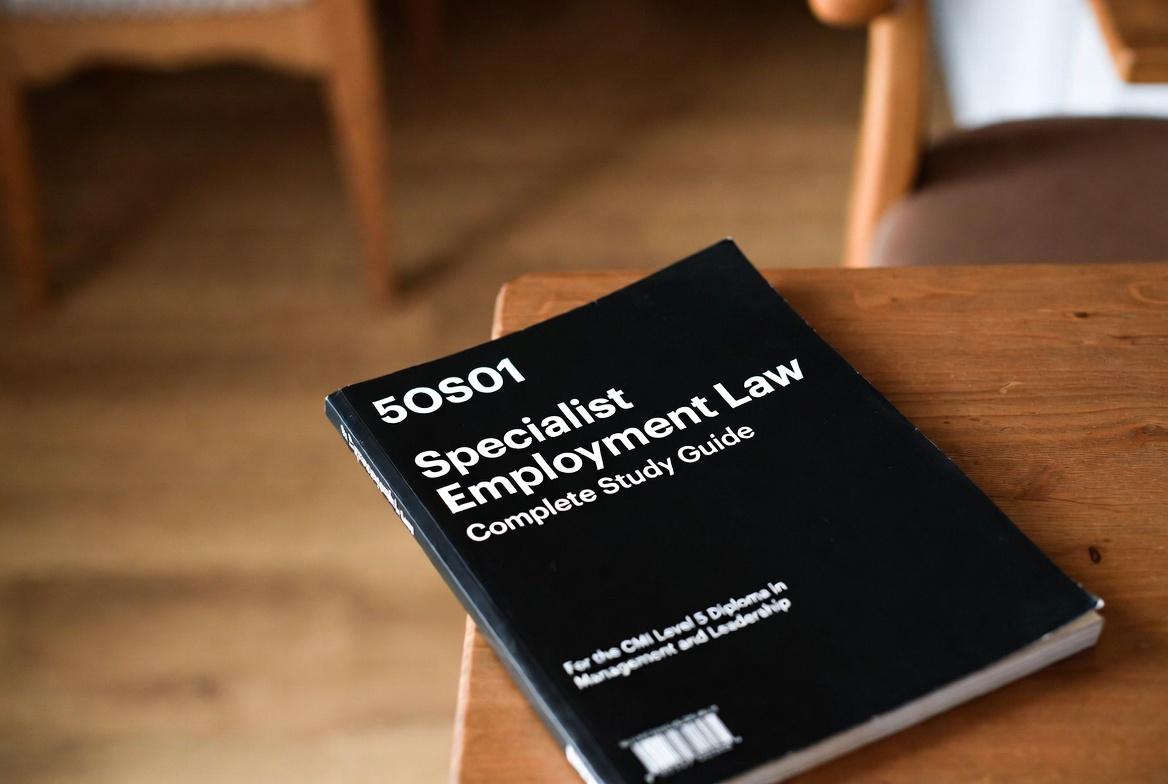
5OS01 Specialist Employment Law is one of seven optional units in the CIPD Level 5 Associate Diploma. Worth 6 credits, it provides a comprehensive overview of UK employment legislation—essential knowledge for any HR professional who needs to advise on legal compliance and manage risk.
This guide breaks down everything you need to understand about 5OS01, including the key legal principles, what each assessment criterion is asking for, and how to approach your assignment effectively.
What You'll Learn in 5OS01
The unit covers four main learning outcomes:
- Understand the purpose of employment regulation and the way it is enforced in practice — Why we have employment law, arguments for and against regulation, and how the tribunal and court system works.
- Understand how to manage recruitment and selection activities lawfully — Discrimination law principles, protected characteristics, types of discrimination, and equal pay requirements.
- Understand how to manage change and reorganisation lawfully — Varying contracts, redundancy law, and TUPE (Transfer of Undertakings).
- Understand how to manage issues relating to pay and working time lawfully — Working Time Regulations, family-friendly rights, and flexible working.
Key Legal Frameworks for 5OS01
The Equality Act 2010
This is the cornerstone of UK discrimination law. Key concepts:
The Nine Protected Characteristics:
- Age
- Disability
- Gender reassignment
- Marriage and civil partnership
- Pregnancy and maternity
- Race
- Religion or belief
- Sex
- Sexual orientation
Types of Discrimination:
Direct discrimination: — Treating someone less favourably because of a protected characteristic. No justification defence (except for age, where objective justification is possible).
Indirect discrimination: — Applying a provision, criterion or practice (PCP) that puts people with a protected characteristic at a disadvantage, unless objectively justified.
Harassment: — Unwanted conduct related to a protected characteristic that violates dignity or creates a hostile environment. Includes sexual harassment.
Victimisation: — Treating someone badly because they've made or supported a complaint about discrimination.
Discrimination arising from disability: — Treating a disabled person unfavourably because of something arising from their disability, unless justified.
Failure to make reasonable adjustments: — Not taking steps to remove barriers for disabled people.
Employment Rights Act 1996
Key provisions relevant to 5OS01:
Unfair dismissal: — Right not to be unfairly dismissed (requires 2 years' service in most cases)
Redundancy: — Statutory definition and redundancy pay entitlements
Flexible working: — Right to request (now from day one)
Written particulars: — Right to a written statement of employment terms
Working Time Regulations 1998
Key provisions:
Maximum 48-hour week: (averaged over 17 weeks, can be opted out)
Minimum rest periods: — 11 consecutive hours between shifts, 24 hours uninterrupted rest per week
In-work breaks: — 20 minutes if working more than 6 hours
Annual leave: — Minimum 5.6 weeks (28 days for full-time)
Night worker protections: — Average 8 hours per 24-hour period
TUPE Regulations 2006 (as amended)
Transfer of Undertakings (Protection of Employment):
Automatic transfer: — Employees transfer to new employer with existing terms
Protection from dismissal: — Dismissal connected to transfer is automatically unfair unless ETO reason
Information and consultation: — Duty to inform and consult affected employees
Employee liability information: — Outgoing employer must provide details to incoming employer
Maternity, Paternity, and Family Rights
Key provisions:
Maternity leave: — 52 weeks (26 ordinary + 26 additional)
Statutory Maternity Pay: — 39 weeks (90% for 6 weeks, then statutory rate)
Paternity leave: — 2 weeks
Shared Parental Leave: — Up to 50 weeks can be shared
Adoption leave: — Same as maternity
Parental leave: — 18 weeks unpaid per child (up to age 18)
Time off for dependants: — Reasonable unpaid time for emergencies
The Court and Tribunal System
Understanding the hierarchy:
- Employment Tribunal — First instance for most employment claims
- Employment Appeal Tribunal (EAT) — Appeals on points of law only
- Court of Appeal — Further appeals on law
- Supreme Court — Final court of appeal in UK
- County Court/High Court — Contract claims, some discrimination claims
ACAS Early Conciliation is mandatory before most tribunal claims.
Assessment Criteria Breakdown
Learning Outcome 1: Purpose and Enforcement of Employment Regulation
AC 1.1: Evaluate the aims and objectives of employment regulation
This asks you to:
- Explain why employment law exists (social justice, fairness, protection)
- Discuss economic arguments for regulation (prevents exploitation, promotes stability)
- Consider arguments against (complexity, cost, job creation barriers)
- Identify groups who support or oppose greater regulation
- Make a balanced evaluation
Key verb: "Evaluate" means weigh up arguments and reach a judgement.
AC 1.2: Examine the role played by the tribunal and courts system in enforcing employment law
This asks you to:
- Explain the hierarchy of courts and tribunals
- Describe the role of Employment Tribunals
- Explain how appeals work through EAT, Court of Appeal, Supreme Court
- Discuss the role of County/High Court for certain claims
- Consider the impact of case law in developing employment law
Be accurate about which court hears what type of case.
Learning Outcome 2: Lawful Recruitment and Selection
AC 2.1: Explain the main principles of discrimination law in recruitment, selection and employment
This asks you to:
- Cover the nine protected characteristics
- Explain direct and indirect discrimination
- Cover harassment and victimisation
- Discuss discrimination arising from disability and reasonable adjustments
- Explain occupational requirements as a defence
- Reference relevant cases
This is a substantial AC—structure your answer around types of discrimination.
AC 2.2: Discuss the legal requirements of equal pay
This asks you to:
- Explain equal pay principles (same work, work rated as equivalent, work of equal value)
- Cover the comparator requirement
- Discuss material factor defence
- Explain equal pay reviews and audits
- Reference key cases
Equal pay is distinct from general discrimination—treat it separately.
Learning Outcome 3: Managing Change and Reorganisation Lawfully
AC 3.1: Discuss the legal implications of varying contracts
This asks you to:
- Explain lawful methods to change terms (agreement, collective bargaining)
- Cover fire and rehire risks
- Discuss constructive dismissal implications
- Explain breach of contract claims
- Consider flexibility clauses
This is topical—fire and rehire has been in the news. Reference ACAS guidance.
AC 3.2: Explain the legal requirements relating to redundancy
This asks you to:
- Define redundancy legally (closure, reduced need for work)
- Cover individual and collective consultation requirements
- Explain selection criteria and pools
- Discuss statutory redundancy pay calculation
- Cover notice periods and other rights
- Identify discrimination risks
Be precise on consultation thresholds (20+ employees = collective consultation).
AC 3.3: Explain the legal requirements relating to transfers of undertakings
This asks you to:
- Explain what constitutes a relevant transfer
- Cover automatic transfer of employees
- Explain protection from dismissal (ETO reason)
- Discuss information and consultation duties
- Cover employee liability information requirements
TUPE is technical—focus on principles rather than every detail.
Learning Outcome 4: Pay and Working Time
AC 4.1: Explain the major statutory rights in leave and working time
This asks you to:
- Cover Working Time Regulations provisions
- Explain maximum hours, rest periods, annual leave
- Discuss night worker protections
- Cover holiday pay calculations
- Reference young worker provisions
Be specific about numbers (48 hours, 11 hours rest, 5.6 weeks leave).
AC 4.2: Explain the main principles of maternity, paternity and adoption rights in the context of employment rights
This asks you to:
- Cover maternity leave and pay entitlements
- Explain paternity and adoption rights
- Discuss Shared Parental Leave
- Cover time off for antenatal care
- Explain KIT and SPLIT days
These are detailed provisions—focus on main principles, not every exception.
AC 4.3: Explain employment rights relating to flexible working
This asks you to:
- Explain the right to request flexible working
- Cover who can request (now all employees from day one)
- Explain the eight business reasons for refusal
- Discuss remedies for breach
- Cover time off for dependants (related but separate)
Note recent changes—flexible working rights have been extended.
Common Mistakes to Avoid
- Being vague about legal requirements — Use specific terms (e.g., "protected characteristic" not "protected group"). Reference legislation correctly.
- Confusing direct and indirect discrimination — Direct is treating someone less favourably BECAUSE OF a characteristic. Indirect is a neutral policy that has disproportionate impact.
- Forgetting defences and justifications — Age discrimination and indirect discrimination can be justified. Reasonable adjustments have limits. Show you understand nuance.
- Ignoring recent changes — Employment law changes regularly. Check current rules on flexible working, fire and rehire guidance, and family leave.
- Not referencing cases — Key cases strengthen your answers. You don't need many, but a few well-chosen ones show depth.
- Treating law as black and white — Law involves interpretation. Tribunals apply tests like "reasonable employer." Show you understand this.
Useful Resources for 5OS01
CIPD Resources
Employment Law Factsheets: — Regularly updated guidance on all topics
Statutory Rates and Compensation Guide: — Current figures
Recent and Forthcoming Legislation: — Stay current
ACAS Resources
Employment Contracts Guide:
Discipline and Grievance Code of Practice:
Redundancy Handling Guide:
TUPE Guidance:
Government Resources
GOV.UK Employing People: — Official guidance
Equality and Human Rights Commission: — Discrimination guidance
Key Textbooks
- Lewis & Sargeant: Employment Law: The Essentials (CIPD)
- Daniels: Introduction to Employment Law (CIPD)
- Taylor & Emir: Employment Law: An Introduction
How People Study Pro Helps with 5OS01
People Study Pro provides structured guidance for every 5OS01 assessment criterion:
Criterion-by-criterion guidance: — Understand exactly what each AC is asking
Suggested structure: — Know how to organise your answers
Key concepts: — Identify what to cover without being given the answer
Harvard referencing tool: — Generate correct citations for legislation and cases
AI and plagiarism checking: — Submit with confidence that your work is original
Getting Started
If you're working on 5OS01:
- Get your legal framework right — Know which Act or Regulation covers each topic
- Use current sources — Employment law changes regularly, so check dates
- Reference accurately — Legislation titles, section numbers where relevant
- Apply to scenarios — Don't just describe law; show how it applies
- Consider practical implications — What does this mean for HR practice?
5OS01 gives you the legal foundation you need to advise confidently on employment matters. Master this, and you'll be better equipped to manage risk and protect your organisation.