How to Use the PEEL Technique in CIPD Assignments
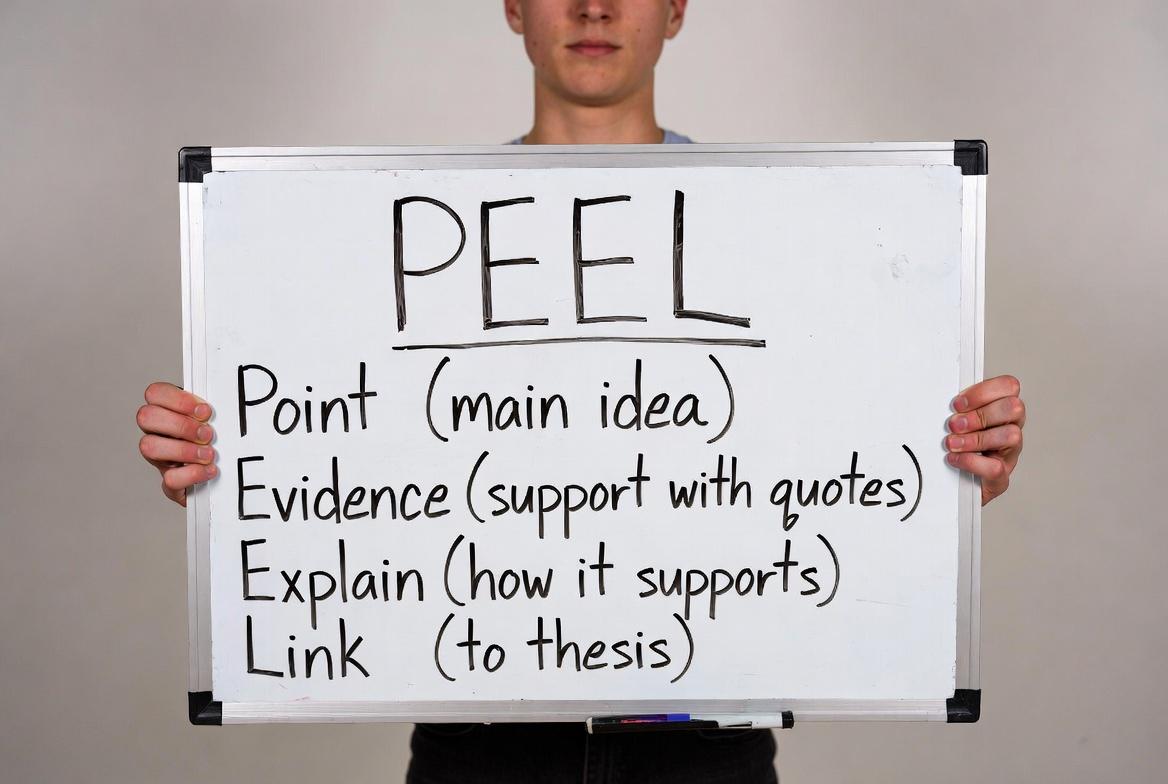
In the world of human resources and people management, the Chartered Institute of Personnel and Development (CIPD) sets a high bar for its learners. Assignments aren't just about regurgitating facts—they demand critical thinking, robust evidence, and a clear, logical structure. If you've ever struggled to organise your thoughts or felt your arguments lacked punch, the PEEL paragraph technique could be your secret weapon.
Standing for Point, Evidence, Explanation, and Link, PEEL provides a straightforward framework to build compelling paragraphs that impress assessors. Whether you're a CIPD Level 3, 5, or 7 student, mastering this technique will elevate your assignments and boost your confidence.
Understanding the Basics of PEEL
Before we break it down, it's worth noting why PEEL is so effective for CIPD work. The institute emphasises evidence-based practice, where you not only describe concepts but also critique them and link them to real-world HR scenarios. PEEL ensures each paragraph is self-contained yet contributes to the overall flow of your assignment. It's simple, memorable, and adaptable to any topic, from employee engagement to diversity and inclusion.
Think of PEEL as a building block. Each paragraph starts with a strong foundation (the Point), adds supporting pillars (Evidence), explores the implications (Explanation), and connects to the bigger structure (Link). This method prevents rambling and keeps your writing focused.
Step 1: The Point – Laying the Foundation
The first element of PEEL is the Point. This is your paragraph's core idea—a concise statement that directly addresses the question. It should be specific, relevant, and positioned right at the beginning to guide the reader. Vague points lead to weak paragraphs, so aim for clarity and precision.
A strong Point is specific (directly addresses the assignment question), clear (states your main argument in one concise sentence), relevant (ties to the overall topic and assessment criteria), and front-loaded (positioned at the very beginning of the paragraph).
For example, if you're writing about Edgar Schein's model of organisational culture, a solid Point might read: "Edgar Schein argued that organisational culture operates at three distinct levels: artefacts, espoused values, and basic underlying assumptions." This isn't just a summary—it directly engages with the query and sets the stage for deeper discussion.
Why does this work? By front-loading your main argument, you signal to the assessor what to expect. In CIPD assignments, where word counts are tight, this efficiency is crucial. It also demonstrates your ability to synthesise complex ideas into digestible bites.
Step 2: Evidence – Backing It Up with Substance
No Point stands alone; it needs Evidence to gain credibility. This stage involves citing reliable sources, data, or examples to support your claim. CIPD values wider reading, so draw from academic texts, professional reports, and real-life cases. Avoid unsubstantiated opinions—evidence turns your paragraph from assertion to argument.
Building on our Point about Schein's model, the Evidence could include: "Schein (2010) delineates artefacts as the visible elements, such as office layouts, dress codes, and rituals; espoused values as the articulated strategies, goals, and philosophies; and basic underlying assumptions as the deeply ingrained, often unconscious beliefs that shape behaviour."
To enrich this, add a practical example: "For instance, in a tech company, artefacts might include open-plan offices and casual attire, espoused values could emphasise innovation and collaboration, yet underlying assumptions might prioritise individual achievement over team harmony."
This Evidence draws directly from Schein's seminal work and illustrates the model in action. Including a real-world example shows application, a key CIPD criterion. Remember to use Harvard referencing—it's not optional; it proves academic integrity and allows assessors to verify your sources.
Step 3: Explanation – Analysing the 'Why' and 'How'
Here's where the magic happens: the Explanation. This isn't about repeating the Evidence; it's about dissecting it to reveal its significance. Why does this matter? How does it relate to HR practice? This stage showcases your critical thinking, turning descriptive writing into analytical gold.
For Schein's model, an Explanation might go like this: "Schein's three-level framework reveals that organisational culture has multiple layers and can often be deceptive. Artefacts and espoused values are surface-level and easier to observe or change, but basic assumptions form the core, resisting alteration and profoundly influencing employee behaviour. This insight is essential for HR professionals, as it explains why culture change initiatives frequently fail—superficial tweaks, like updating mission statements, won't shift entrenched beliefs. In practice, this means HR must conduct thorough cultural audits, perhaps using surveys or focus groups, to uncover hidden assumptions before implementing changes."
This Explanation bridges theory and practice, a hallmark of strong CIPD assignments. It demonstrates depth by exploring implications, such as the challenges of cultural transformation. Avoid shallow statements like "This is important"; instead, probe deeper. Ask yourself: What are the consequences? Who benefits? How does this align with CIPD ethics?
Step 4: The Link – Connecting the Dots
The final piece is the Link, which ties your paragraph back to the question and transitions to the next idea. It ensures cohesion, preventing your assignment from feeling like disjointed fragments. A good Link reinforces the broader argument and hints at what's coming.
In our example: "Therefore, Schein's three-level model underscores the need for HR practitioners to look beyond observable behaviours when assessing and shaping organisational culture, providing a foundational tool for effective people management."
This not only recaps the Point but also links to the assignment's overall theme, paving the way for discussing related theories. Without a strong Link, paragraphs can feel abrupt. In longer assignments, this element maintains flow, showing the assessor your work is a unified whole.
Applying PEEL to Human Behaviour Theories
Let's extend PEEL to another common CIPD topic: explaining a model of human behaviour using Maslow's hierarchy of needs.
Point: "Maslow's theory proposes that human motivation ascends through a hierarchy of five levels, from basic physiological needs to self-actualisation."
Evidence: "Maslow (1943) outlined the levels as physiological (food and shelter), safety (security and stability), love/belonging (relationships), esteem (respect and achievement), and self-actualisation (personal growth). The CIPD endorses this in their guidance on employee motivation, highlighting its role in designing holistic reward systems."
Explanation: "Maslow's model illustrates that motivation isn't one-size-fits-all; unmet lower needs block progression to higher ones. For HR, this means reward strategies must address the full spectrum—salary alone might satisfy basics, but building belonging through team-building or esteem via recognition schemes drives true engagement. In today's hybrid work environments, this theory helps explain phenomena like the 'Great Resignation,' where employees seek fulfilment beyond pay."
Link: "Thus, Maslow's hierarchy elucidates individual behaviour dynamics in organisations and synergises with cultural models like Schein's, as both emphasise underlying factors shaping actions at work."
Why PEEL Elevates Your CIPD Work
Beyond individual paragraphs, PEEL encourages overall assignment excellence. It promotes evidence-based arguments, critical analysis, and logical progression—all CIPD staples. Pair it with Harvard referencing to cite your sources properly, and your work demonstrates professionalism.
Common pitfalls to avoid include skipping the Explanation (leading to purely descriptive writing) or weak Links (causing disjointedness). With practice, PEEL becomes intuitive and your writing will flow naturally.
Putting It All Together
The PEEL technique is a game-changer for CIPD assignments. By creating clear Points, robust Evidence, insightful Explanations, and seamless Links, you'll produce work that's coherent, persuasive, and assessor-friendly.
Applied to topics like Schein's organisational culture or Maslow's needs hierarchy, it transforms complex ideas into accessible arguments. Start practising on your next assignment, and you'll soon see the difference in your grades and confidence.