PESTLE Analysis Explained: How to Use It in Your CIPD Assignments
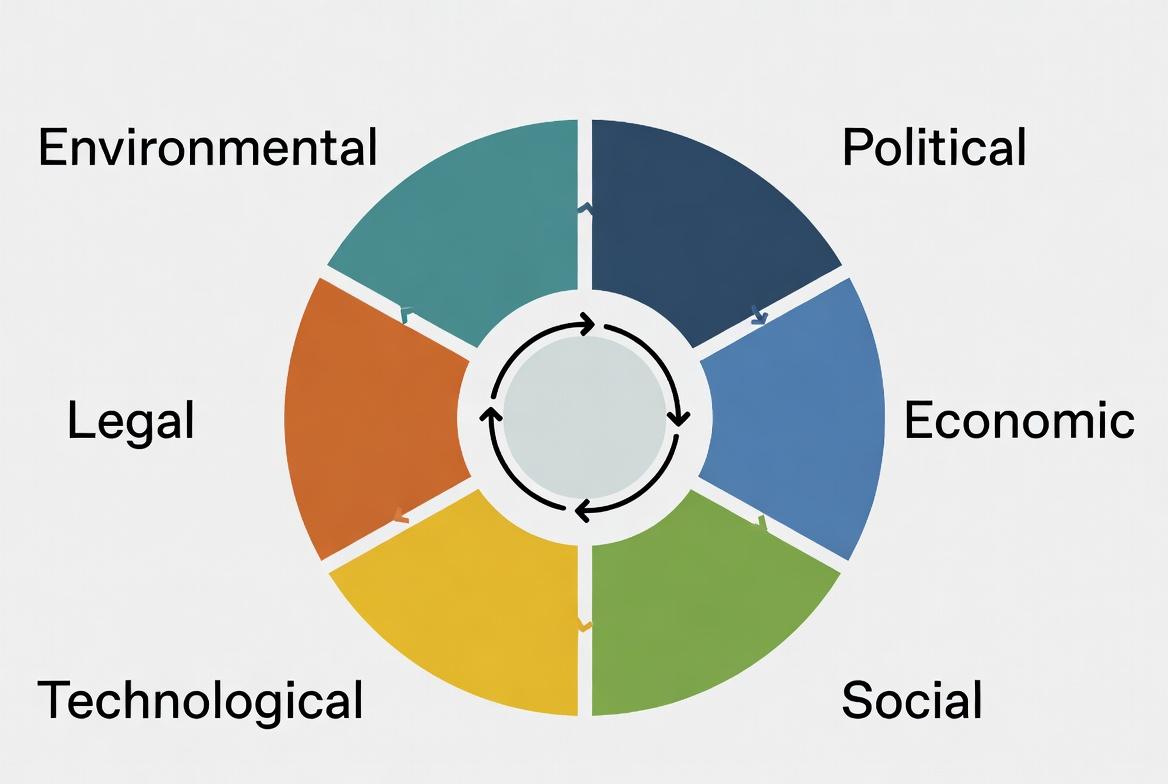
PESTLE analysis is one of the most important frameworks you'll encounter in your CIPD studies. It's a broad fact-finding activity that examines the external factors affecting an organisation's decisions, helping to maximise opportunities and minimise threats.
Understanding PESTLE is essential for CIPD students—it's part of the core knowledge on enabling change and the core behaviour of commercial drive in the CIPD Profession Map.
What is PESTLE Analysis?
PESTLE analysis audits six external influences on an organisation:
Political Factors
Political factors include government policies and political stability that affect business operations:
- Tax policy and reforms
- Environmental regulations
- Trade restrictions and tariffs
- Political stability and instability
- Government spending priorities
- Brexit implications (for UK organisations)
Economic Factors
Economic conditions directly impact organisational performance and workforce planning:
- Economic growth or decline
- Interest rates and exchange rates
- Inflation and wage rates
- Minimum wage legislation
- Working hours regulations
- Unemployment rates (local and national)
- Credit availability
- Cost of living pressures
Social (Sociological) Factors
Social trends influence consumer behaviour, workforce expectations, and organisational culture:
- Cultural norms and expectations
- Health consciousness trends
- Population growth and demographics
- Age distribution in the workforce
- Career attitudes and work-life balance expectations
- Health and safety awareness
- Diversity and inclusion expectations
Technological Factors
Technology is constantly evolving, creating both opportunities and challenges:
- Emerging technologies (AI, robotics, automation)
- Rate of technological change
- Digital transformation requirements
- Remote working technology
- Data protection and cybersecurity
- Impact on products, services, and job roles
Legal Factors
Legal requirements create compliance obligations for organisations:
- Employment law changes
- Health and safety legislation
- Data protection regulations (GDPR)
- Equality and discrimination laws
- Import/export regulations
- Industry-specific regulations
Environmental Factors
Environmental considerations are increasingly important for organisations:
- Climate change and sustainability
- Carbon footprint reduction
- Ethical sourcing requirements
- Supply chain sustainability
- Waste management regulations
- Pandemic preparedness and response
How to Conduct a PESTLE Analysis
Follow these steps to conduct an effective PESTLE analysis:
1. Define the Scope
Identify what you're analysing—it should cover present and possible future scenarios, applicable to the industry and regions where the organisation operates.
2. Assign Responsibilities
Decide how information will be collected and by whom. Include multiple people or teams to bring diverse evidence and perspectives.
3. Identify Information Sources
Some PESTLE factors may be more relevant to your industry than others, but exploring all six provides a comprehensive view of the external environment.
Useful sources include:
- Government publications and statistics
- Industry reports and trade publications
- CIPD research and factsheets
- News and current affairs
- Academic journals
- Professional body guidance (ACAS, etc.)
4. Gather and Analyse Information
Collect data for each PESTLE factor, then analyse the findings to identify:
- Current impacts on the organisation
- Potential future impacts
- Opportunities to exploit
- Threats to mitigate
5. Prioritise and Rate Importance
Mark each item in terms of importance and potential risk to the organisation. Not all factors will have equal impact.
6. Identify Business Options
Based on your analysis, identify options to address the issues and capitalise on opportunities.
7. Share and Discuss
Disseminate findings with stakeholders and decision-makers. PESTLE analysis is most valuable when it informs strategic discussions.
8. Plan Actions
Decide what actions need to be taken and which trends should be monitored ongoing.
Using PESTLE Analysis in CIPD Assignments
PESTLE analysis is particularly relevant in these CIPD units:
5CO01: - Organisational Performance and Culture in Practice
5CO02: - Evidence-Based Practice
3CO01: - Business, Culture and Change in Context
7CO01: - Work and Working Lives in a Changing Business Environment
Tips for CIPD Assignments
When using PESTLE in your assignments:
- Apply it to your case study - Don't just describe PESTLE; apply it to the specific organisation or scenario in your assignment
- Be specific - Use real examples and current data where possible
- Link to HR implications - Always connect external factors to their impact on people management
- Prioritise factors - Identify which factors are most significant for the organisation
- Consider interconnections - Factors often influence each other (e.g., political decisions affecting economic conditions)
PESTLE in Business Planning
PESTLE analysis supports various business planning activities:
Strategic Business Planning
Provides contextual information about business direction, brand positioning, growth targets, and productivity risks. It helps determine the validity of existing products and services and informs new product development.
Workforce Planning
Identifies disruptive changes to business models that may affect the employment landscape. It can highlight skills gaps, new job roles, and potential job reductions or displacements.
Organisational Change
Helps recognise the context for change. It's most effective when used alongside SWOT analysis to understand opportunities and threats around labour changes, skills shortages, or workforce capabilities.
People Strategies
Provides a framework to look outside the organisation and hypothesise what may happen in future. It ensures basic external factors aren't overlooked when aligning people strategies to broader organisational strategy.
Combining PESTLE with Other Tools
PESTLE analysis is most effective when used alongside other analytical frameworks:
SWOT Analysis: - Combines internal strengths/weaknesses with external opportunities/threats
Porter's Five Forces: - Analyses competitive forces in the industry
Competitor Analysis: - Examines what competitors are doing
Scenario Planning: - Develops multiple future scenarios based on PESTLE factors
Advantages and Disadvantages
Advantages
- Simple, easy-to-understand framework
- Facilitates understanding of the wider business environment
- Encourages external and strategic thinking
- Helps anticipate future threats and take preventive action
- Enables organisations to spot and exploit opportunities
Disadvantages
- Risk of oversimplifying or using insufficient data
- Can lead to "paralysis by analysis" if too much data is collected
- Data may be based on assumptions that prove unfounded
- Rapid pace of change makes future predictions difficult
- Needs to be repeated regularly to remain relevant
Key Takeaways
To be effective, PESTLE analysis should be:
Regular: - Conducted periodically, not as a one-off exercise
Collaborative: - Multiple perspectives identify more risks and opportunities
Focused: - Avoid collecting vast amounts of data without proper analysis
Forward-looking: - Don't just describe the present; consider future trends
Action-oriented: - Use findings to inform decisions and strategies
By understanding and applying PESTLE analysis effectively, you'll demonstrate the commercial awareness and strategic thinking that CIPD assessors are looking for in your assignments.