Workforce Planning for CIPD Assignments: A Complete Guide
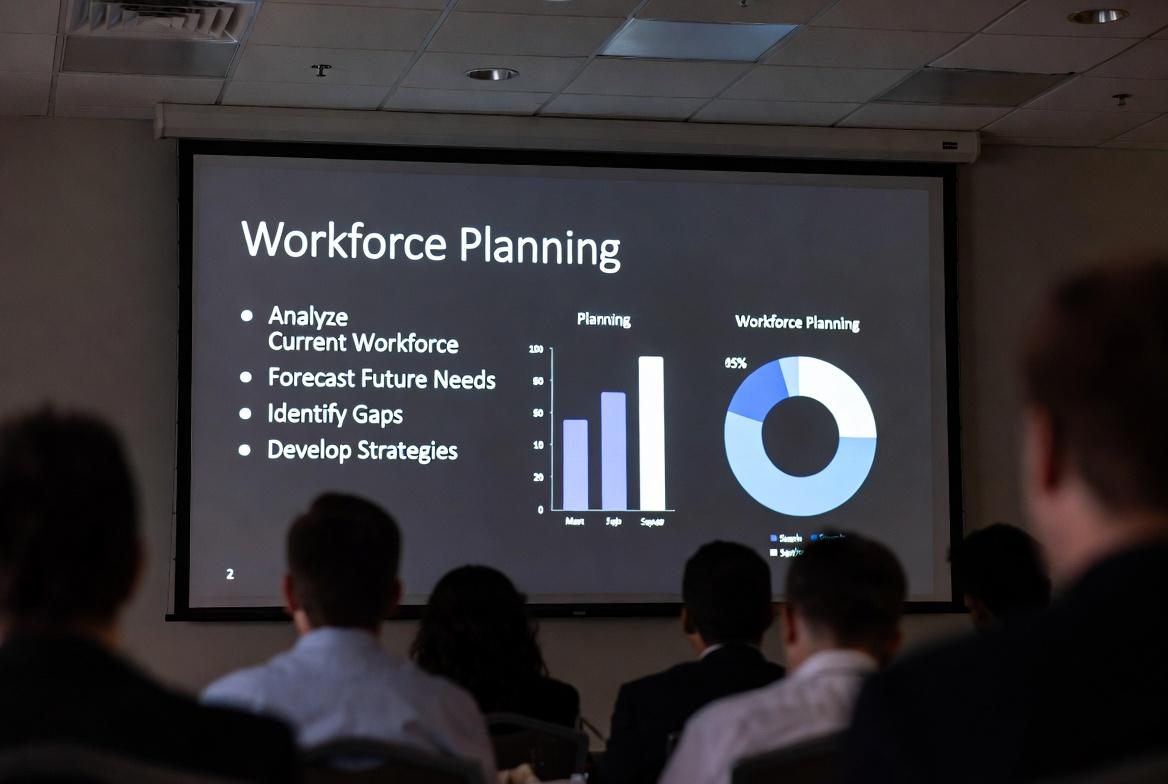
Workforce planning sits at the heart of effective people management. For CIPD students, particularly those studying 5HR02 (Talent Management and Workforce Planning), understanding this concept is essential not just for passing assignments, but for becoming a capable HR professional.
This guide explains what workforce planning involves, why it matters, and how to approach it in your CIPD assignments with the depth assessors expect.
What Is Workforce Planning?
Workforce planning is the process of ensuring an organisation has the right people, with the right skills, in the right roles, at the right time. It sounds straightforward, but in practice it requires careful analysis of both current capabilities and future needs.
The CIPD defines workforce planning as a core activity that aligns business strategy with people strategy. Rather than simply reacting to vacancies as they arise, effective workforce planning takes a proactive approach—anticipating needs before they become urgent problems.
For HR professionals, this means moving beyond administrative tasks into strategic territory. You're not just filling roles; you're shaping the future capability of the organisation.
Forecasting Demand for Labour
The first step in workforce planning is understanding what the organisation will need. Demand forecasting examines future business objectives and translates them into workforce requirements.
Several factors influence labour demand. Business growth plans might require additional headcount in certain areas. New product launches could demand specialist skills the organisation doesn't currently possess. Technological changes might reduce the need for some roles while creating demand for others entirely.
Effective demand forecasting draws on multiple sources. Strategic plans provide direction on where the business is heading. Departmental managers offer insights into operational needs. Historical data reveals patterns in workload fluctuations. External market analysis highlights industry trends that could affect requirements.
The challenge lies in dealing with uncertainty. No forecast is perfect, and organisations must balance precision with pragmatism. The goal isn't to predict the future exactly, but to develop scenarios that enable better decision-making.
In your CIPD assignments, demonstrate that you understand demand forecasting isn't simply guesswork. Show how different methods—from managerial judgement to statistical modelling—can be applied depending on the organisation's context and the availability of data.
Forecasting Internal Supply of Labour
Once you understand demand, you need to assess what's already available. Internal supply analysis examines the current workforce and how it's likely to change over time.
This involves more than counting heads. Internal supply forecasting considers skills and competencies across the workforce, potential for development and promotion, likely turnover and retirement patterns, and the impact of internal moves and transfers.
Skills audits and talent reviews provide the foundation for this analysis. Understanding who has what capabilities—and who could develop them—enables organisations to identify internal candidates for future roles before looking externally.
Succession planning connects directly to internal supply forecasting. By identifying potential successors for critical roles, organisations reduce their vulnerability to unexpected departures. This is particularly important for specialist positions where external recruitment might be difficult or time-consuming.
Turnover analysis adds another dimension. Historical patterns help predict how many people are likely to leave, though this requires careful interpretation. High turnover in one department might reflect management issues rather than market conditions; applying the same assumptions elsewhere would be misleading.
Forecasting External Supply of Labour
Internal supply rarely meets all requirements. External supply analysis examines the availability of talent in the wider labour market.
This encompasses local, national, and sometimes international labour markets depending on the roles in question. For entry-level positions, local supply matters most. For senior specialists, organisations might need to consider national or global talent pools.
External factors significantly influence supply. Economic conditions affect whether people are actively seeking new roles. Educational outputs determine the flow of new graduates with relevant qualifications. Competitor activity can drain supply if other organisations are recruiting aggressively in the same areas.
Demographic trends play an increasingly important role. An ageing workforce in many industries means experienced talent is retiring faster than it's being replaced. Immigration policies affect the availability of international workers. Regional variations in population and skills create local supply challenges that national data might obscure.
For your assignments, acknowledge that external supply is harder to control than internal supply. Organisations can develop their own people, but they can't force the market to produce more candidates with specific skills. This limitation shapes strategic choices about whether to build, buy, or borrow talent.
Identifying Gaps Between Supply and Demand
With forecasts for demand and supply established, the next step is gap analysis. This identifies where future requirements won't be met by projected availability.
Gaps take different forms. Quantitative gaps exist when you simply won't have enough people. Qualitative gaps arise when you'll have the numbers but not the skills. Timing gaps occur when supply will eventually meet demand, but not quickly enough.
Effective gap analysis requires granularity. Organisation-wide summaries might show an overall balance while masking critical shortages in specific areas. Breaking analysis down by function, location, level, and skill type reveals where intervention is actually needed.
The output of gap analysis should be prioritised. Not all gaps carry equal risk. A shortage of customer service advisors might be addressed relatively quickly; a shortage of specialist engineers could take years to resolve. Understanding which gaps pose the greatest threat to business objectives helps focus resources appropriately.
Strategies to Address Workforce Gaps
Identifying gaps is only valuable if you act on them. Organisations employ various strategies to close workforce gaps, and your assignments should demonstrate understanding of when each approach is appropriate.
Recruitment addresses gaps by bringing in new talent. This works well when the external market has suitable candidates and the organisation can compete effectively for them. Speed and cost are the main considerations—recruitment can be quick but may require significant investment in competitive packages.
Development builds capability internally. Training programmes, stretch assignments, and mentoring can close skill gaps over time. This approach strengthens retention and culture but requires patience; you can't develop senior expertise overnight.
Restructuring changes how work is organised. Roles might be redesigned to better match available skills. Responsibilities could shift between teams. In some cases, entire functions might be consolidated or distributed differently.
Outsourcing transfers work to external providers. This suits activities that aren't core to competitive advantage or where specialist expertise is needed temporarily. The trade-off is reduced direct control and potential knowledge loss.
Automation reduces labour requirements altogether. Technology increasingly handles routine tasks, changing the nature of remaining roles rather than simply eliminating them. This requires careful change management to maintain engagement.
Flexible working arrangements expand the available talent pool. Part-time roles, remote working, and job sharing can attract candidates who couldn't consider traditional arrangements. The gig economy and interim management provide access to skills without permanent commitment.
Each strategy has strengths and limitations. Effective workforce planning typically combines several approaches, matching the right solution to each specific gap.
Applying This in Your CIPD Assignment
When writing about workforce planning for your CIPD assessment, move beyond describing concepts to analysing their application. Assessors want to see that you understand not just what workforce planning involves, but why certain approaches work better in particular contexts.
Use examples to illustrate your points, whether from your own organisation or case studies. Abstract discussion of forecasting techniques is less convincing than showing how a specific method helped solve a real problem.
Connect workforce planning to broader business strategy. The purpose isn't HR activity for its own sake—it's ensuring the organisation can achieve its objectives. Make this link explicit throughout your work.
Acknowledge complexity and trade-offs. Simple answers rarely exist in workforce planning. Demonstrating that you understand the tensions between short-term pressures and long-term capability building shows mature thinking.
Finally, reference credible sources to support your analysis. CIPD research, academic literature, and recognised frameworks all strengthen your work and show you've engaged with professional thinking beyond the assignment brief.
Conclusion
Workforce planning transforms HR from a reactive function into a strategic partner. By forecasting demand and supply, identifying gaps, and implementing targeted strategies, organisations can build the capabilities they need for future success.
For CIPD students, mastering workforce planning demonstrates exactly the kind of strategic thinking the profession demands. It's not just about passing your assignment—it's about developing skills you'll use throughout your HR career.